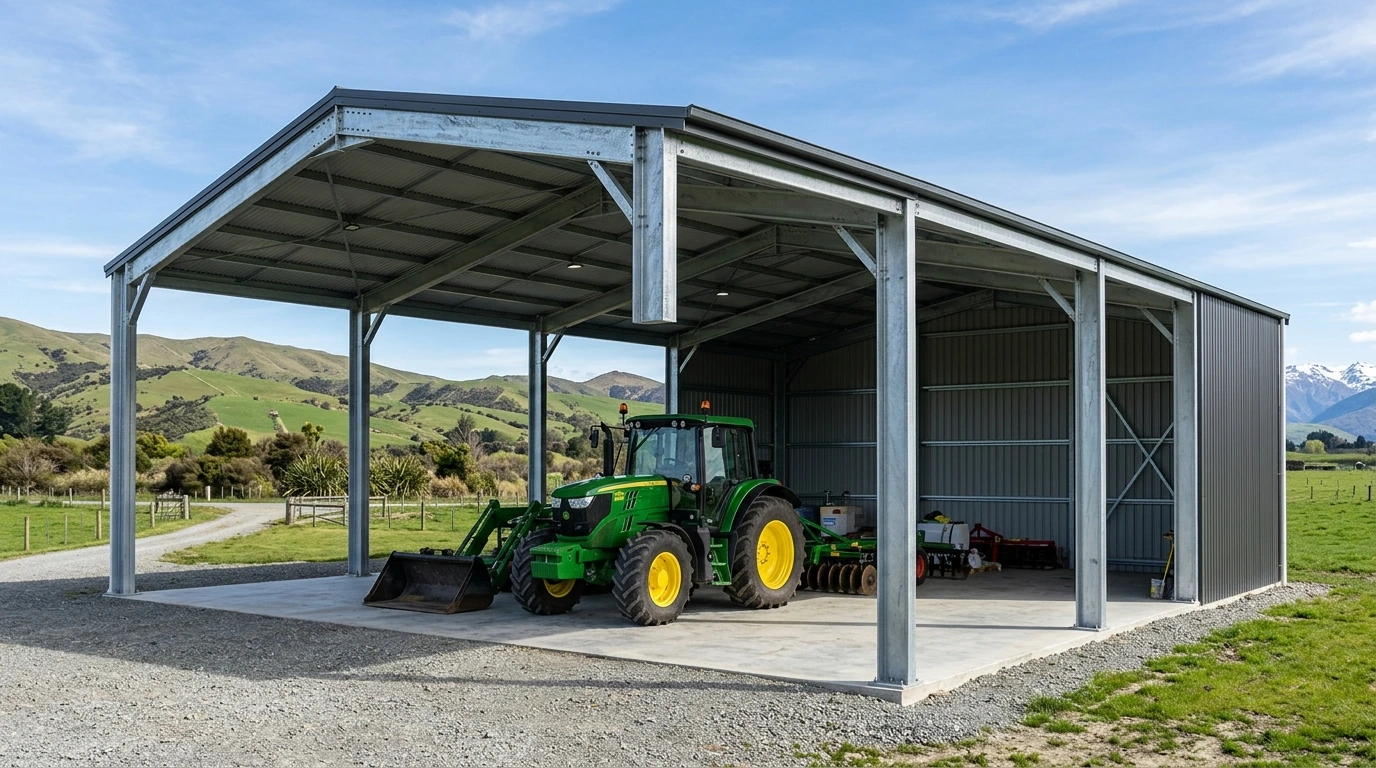
Building a new dairy shed is a major investment, and understanding where the money goes can make the whole process less daunting. Two farms might need buildings of similar sizes but end up with very different construction costs. The difference often comes down to what is being built, where it is going and what needs to happen before the steel framework goes up.
If you’re considering steel dairy shed construction, understanding these cost factors will help you set a more realistic budget and avoid unpleasant surprises.
Building Size and Structural Requirements
Naturally, a larger shed needs more steel, roofing, cladding and labour. But floor area alone won’t tell you what the construction will cost.
The height of the building, distance between columns and complexity of its steel framing also matter. Wider clear spans may require heavier structural members, while additional roof height can change material quantities and installation requirements. A straightforward building design can sometimes be more economical than one with unnecessary structural complications.
The Type of Milking Facility
A rotary dairy and a herringbone dairy have different building requirements. The equipment arrangement, working spaces and supporting infrastructure all influence the overall project.
For example, a rotary installation may need a larger dedicated working area and particular structural clearances. A herringbone facility has its own requirements for pit dimensions, equipment positioning and surrounding access.
It makes sense to finalise the milking system before committing to the building design. Changes made later can affect foundations, steel framing and construction costs.
Ground Conditions and Foundation Work
What lies beneath the proposed building can have a surprising effect on your budget.
Firm, stable ground may require less extensive preparation than a site with soft soil, uneven levels or poor drainage. Additional excavation, engineered foundations or ground improvements can increase costs before the main structure even begins. Access also matters. If construction vehicles struggle to reach the site, transporting materials and organising equipment may become more expensive.
A proper site assessment helps identify these issues early.
Roofing, Cladding and Steel Protection
Not all steel dairy sheds need exactly the same roofing and wall systems. The materials selected will depend on the building’s design, exposure to weather and intended use.
Protective coatings and suitable cladding help steel components withstand demanding farm conditions. Depending on the design, insulation and condensation control may also need consideration. Choosing materials based only on their initial price can be misleading. Maintenance requirements and durability are worth considering alongside installation costs.
Drainage and Supporting Infrastructure
A dairy shed needs more than a completed steel structure to operate properly.
Water supply, wash-down drainage, effluent handling and electrical installations can all add to the overall project budget. Milk storage areas and associated equipment may also require specialist construction details.
These costs are particularly important when comparing quotations. One proposal might cover the steel building alone, while another includes more of the supporting work. Make sure you understand exactly what is included before making comparisons.
Building Consents and Compliance Requirements
New Zealand dairy buildings must meet relevant construction and farm dairy requirements. Depending on the project, this can involve engineering documentation, building consent applications and assessments relating to milk hygiene and effluent management.
It is recommended to assess site suitability and applicable requirements before construction begins. Addressing these matters early can help prevent redesigns and expensive interruptions later.
How Can You Keep Construction Costs Under Control?
The cheapest quotation does not necessarily offer the best value. A practical approach is to establish your essential requirements first, then discuss construction options with an experienced steel building contractor.
Consider these points when reviewing your budget:
- Choose building dimensions that suit your actual equipment and operations.
- Avoid unnecessary changes once engineering and fabrication are underway.
- Confirm which site preparation and foundation works are included.
- Compare material specifications rather than looking at price alone.
- Allow a reasonable contingency for unexpected site conditions.
Get a Clearer Picture of Your Dairy Shed Investment
Every dairy property presents different building requirements, so a reliable construction estimate needs more than approximate shed dimensions.
Push Construction brings decades of steel construction experience to agricultural buildings, including steel dairy sheds. We consider site conditions, structural requirements and the practical details involved in delivering a dependable building.
Before making a decision, discuss your proposed project, intended use and available budget. A carefully assessed construction scope gives you a much better starting point for understanding the investment involved.